The process
Ecoprint & Felt
Two ancestral techniques that turn leaves, flowers and wool into irrepeatable pieces.
Eco-print in five steps
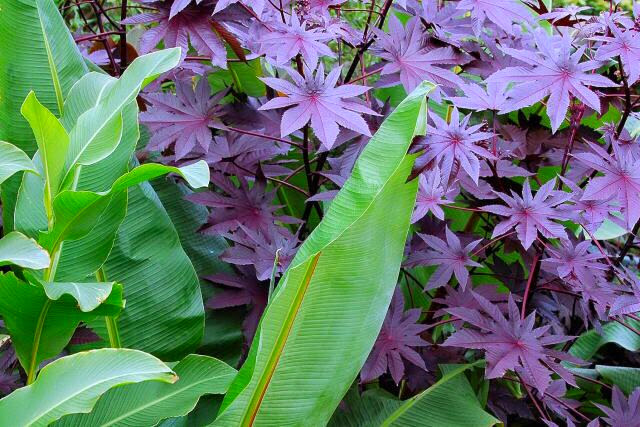
1 · Harvest
Respectful gathering of leaves and seasonal flowers, plants from Chile's Valparaíso region.
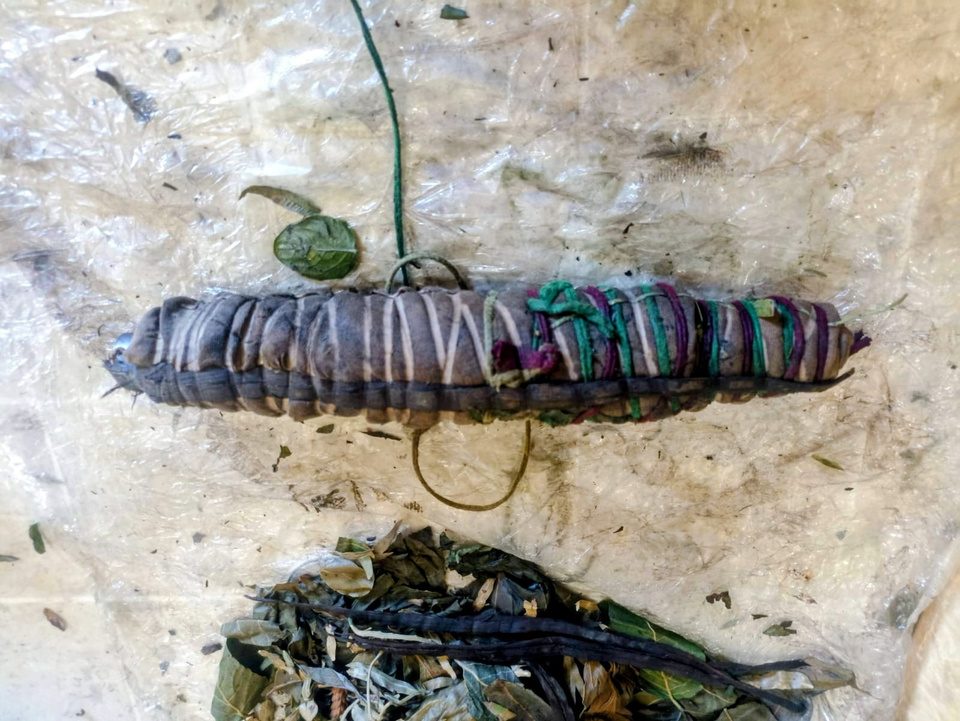
2 · Mordanting
The fibre is prepared with mordants (alum, soda ash or iron sulphate) so the tannins bind and the colour lasts.
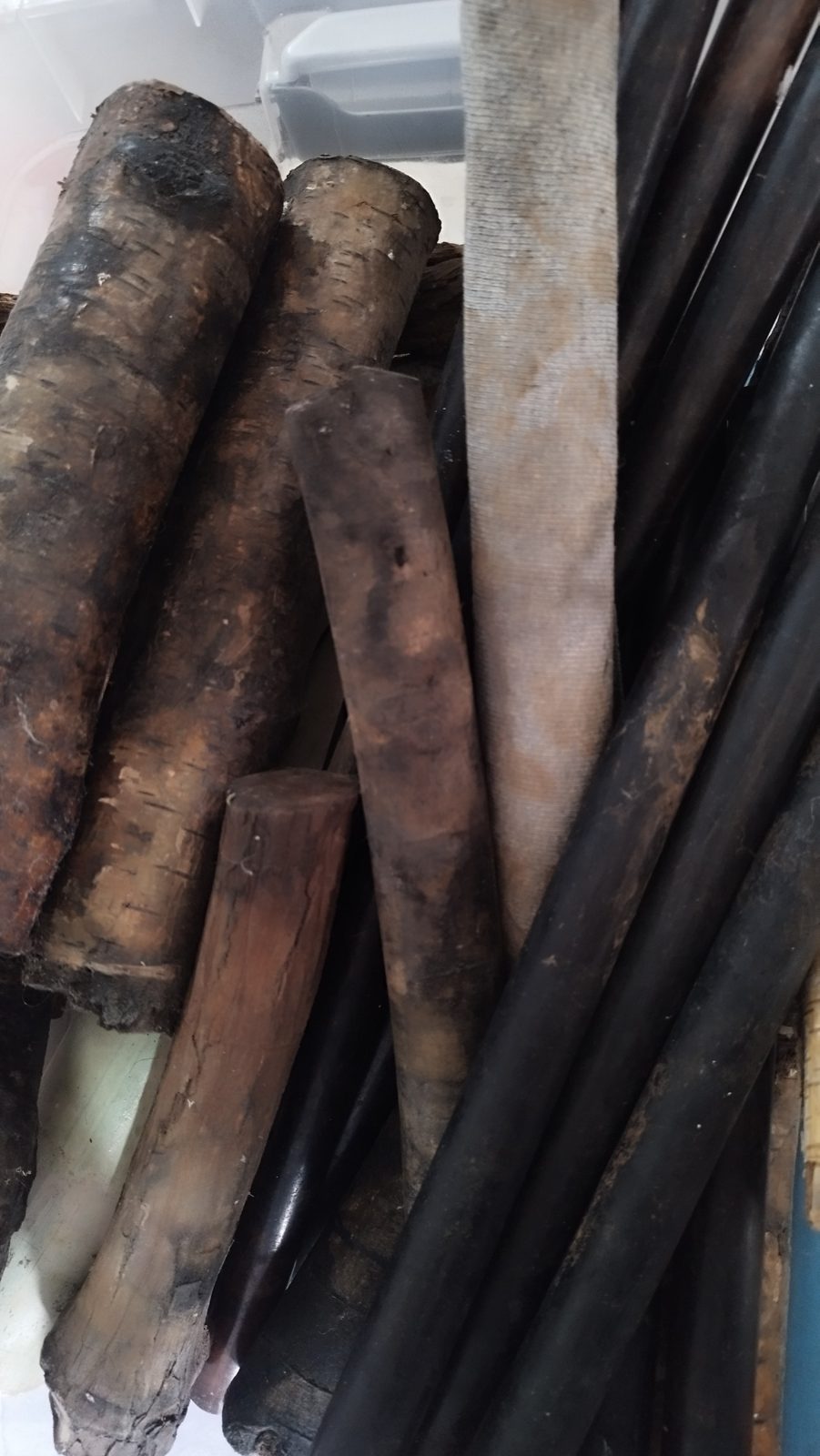
3 · Composition
Leaf by leaf, each piece is composed onto the fibre, drawing the map the pigment will reveal.
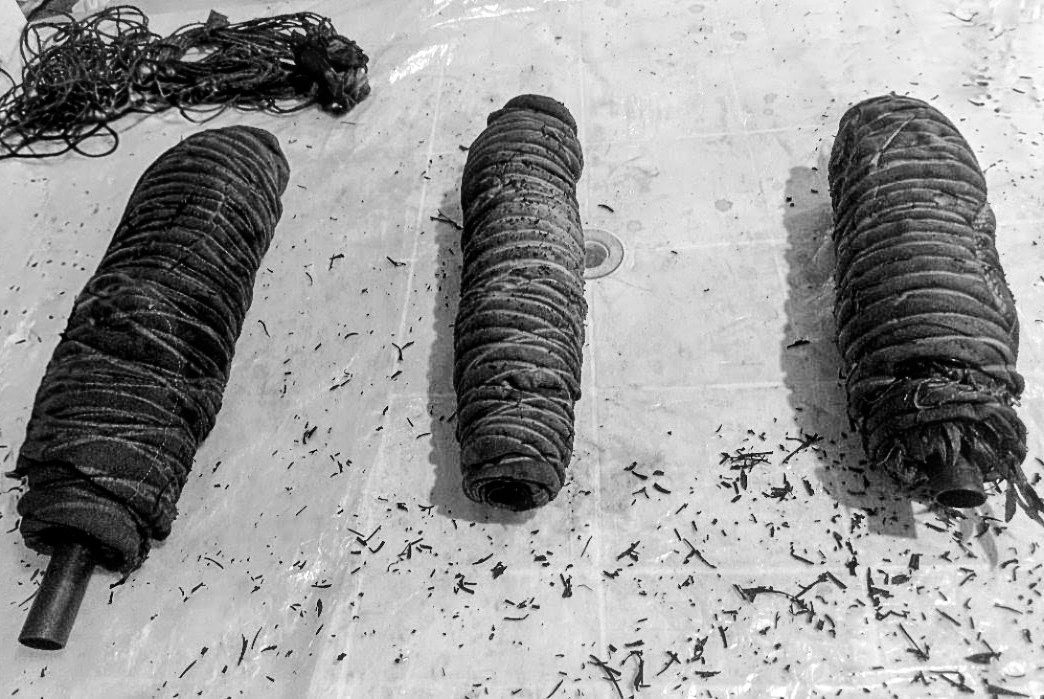
4 · Steam
Hours of steam release tannins and colour directly onto the fibre, without industrial dyes.
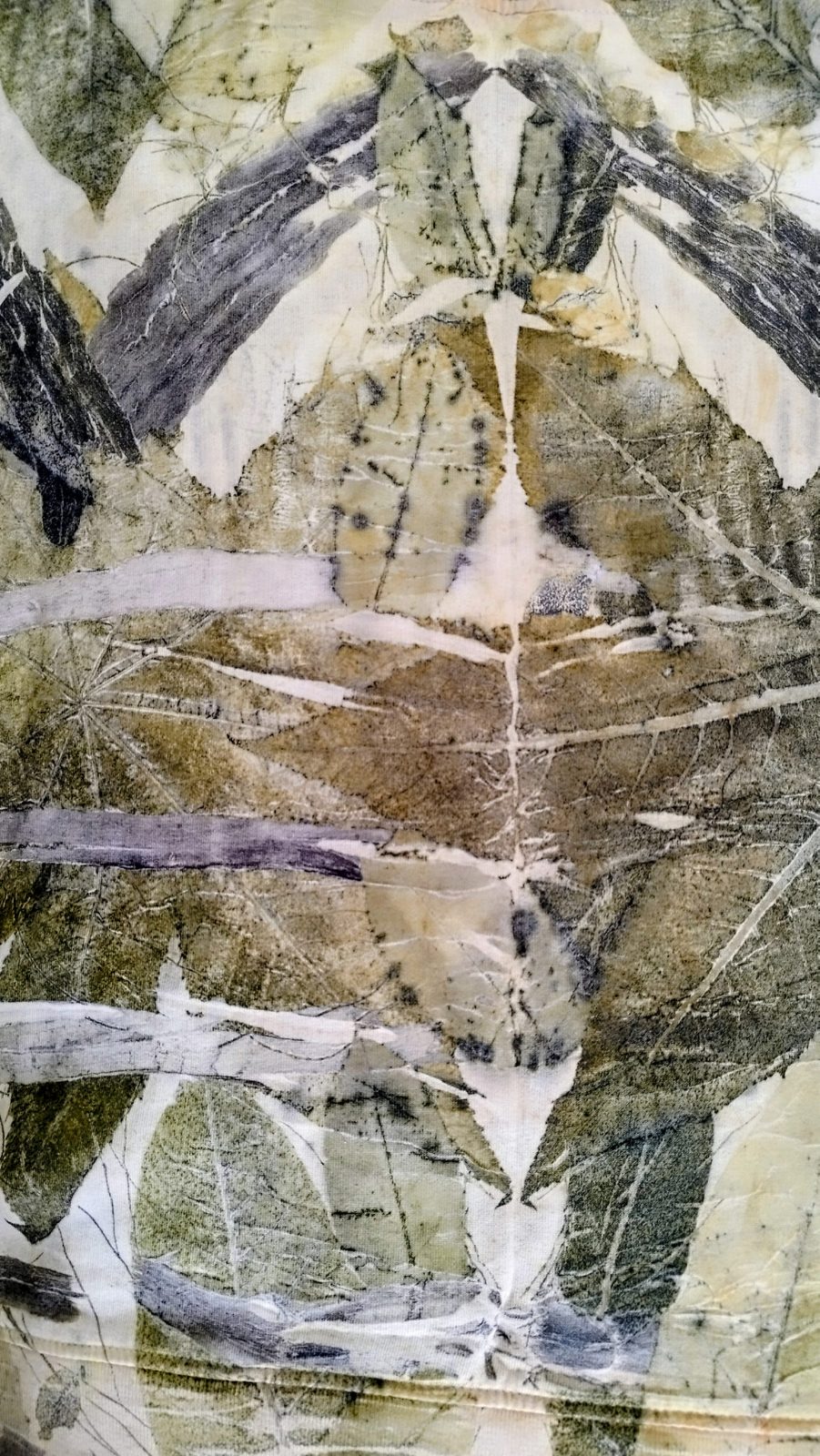
5 · Reveal
When the roll is opened, the forest is printed. Each revelation is irrepeatable.
The technique
Ecoprint
Ecoprint begins where plant meets fibre. Leaves, flowers and bark release their tannins and pigments onto silks from India and Vietnam, organic cotton and, above all, reclaimed garments given a second life. Each piece is a wordless conversation between the maker and the landscape. What remains imprinted is not merely colour: it is the trace of a morning, the memory of a season.
The technique
Shibori and indigo
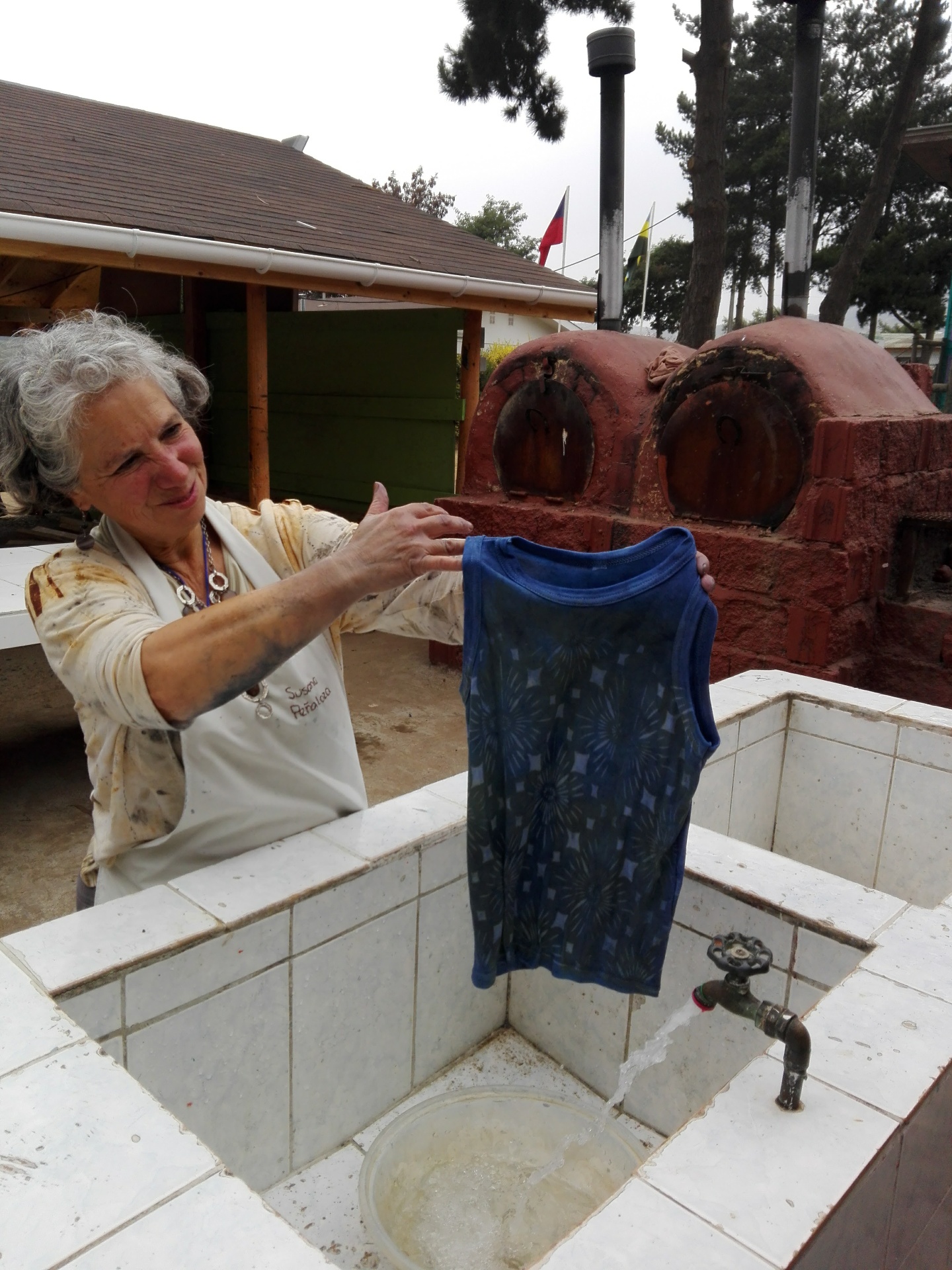
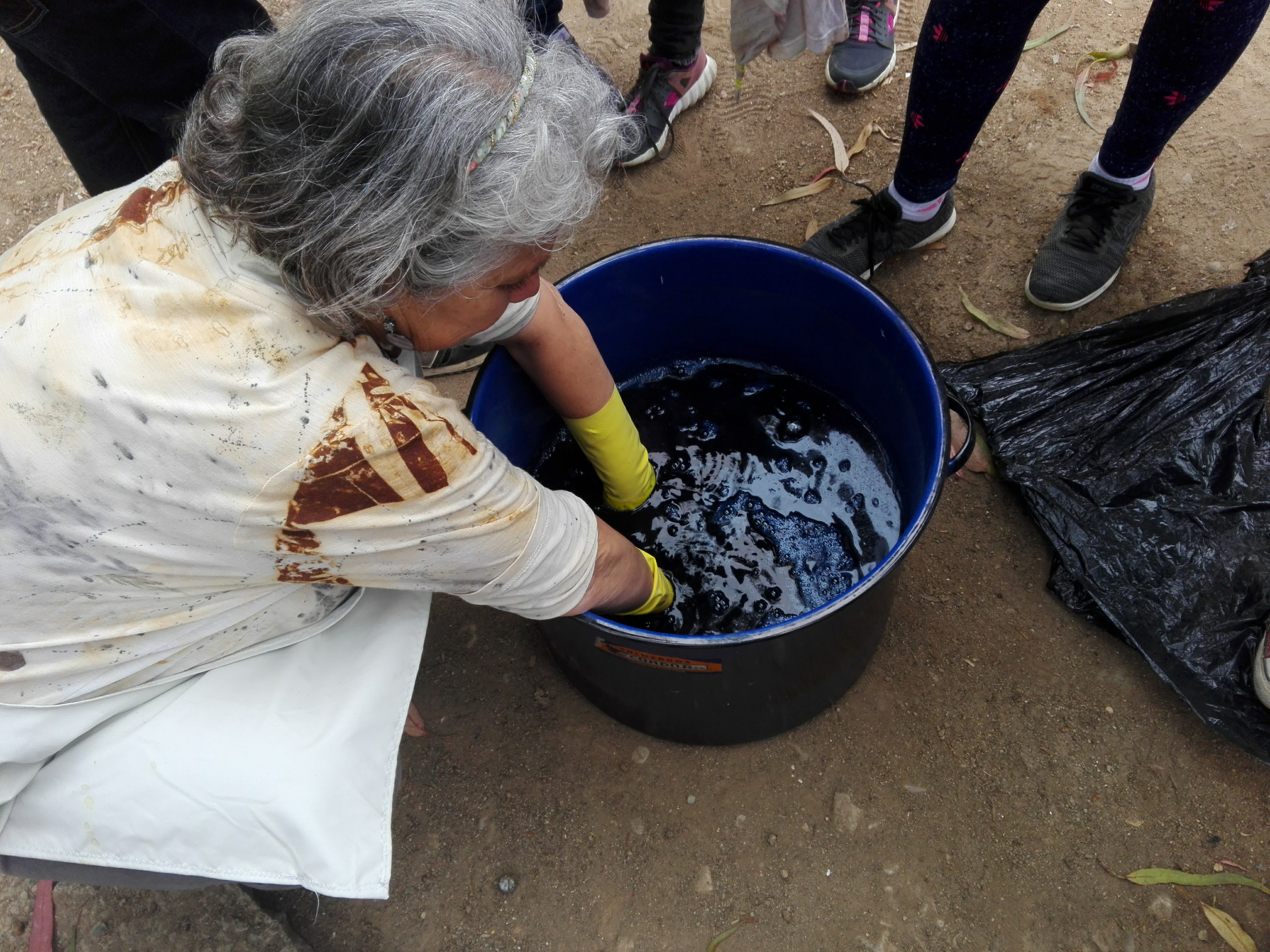
Susana learned traditional Japanese resist and indigo dyeing techniques at Shibata Reiho's atelier in Okazaki. Folding, binding and pressing the fabric before the indigo bath decides where colour enters and where it does not.
The technique
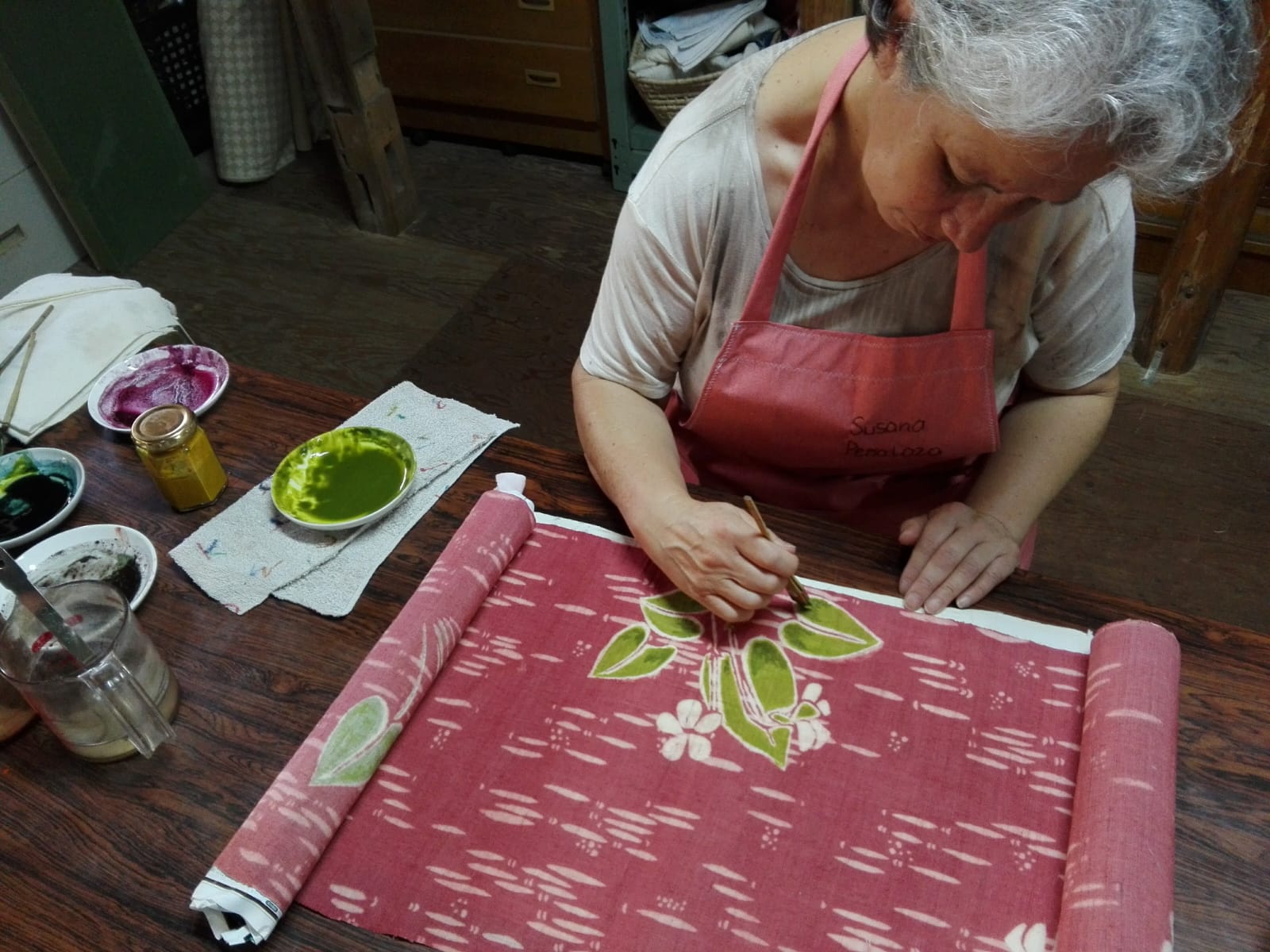
Katazome
A Japanese stencil-dyeing technique: rice paste is applied through a paper stencil (katagami) to resist the fabric, which is then dyed by brush or immersion. Susana learned it in Okazaki in 2017.
The technique
Felt
Felt is one of the oldest textile techniques in the world. Merino wool, alpaca and llama fibre are transformed with water, natural soap and the rhythm of the hands, until they become dense, malleable, living matter. The result is sculptural silhouettes with natural thermal properties and a texture that shifts with every gesture. What is touched never repeats; what is worn endures.